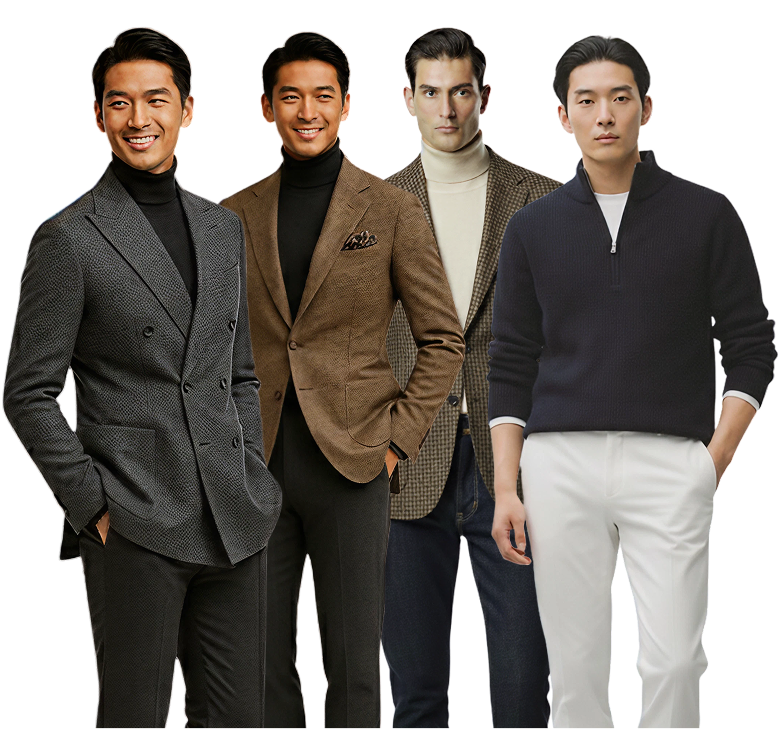
Discover our Capsule Collections — fewer pieces, more outfits, crafted exclusively for you.
Show Now



- American Dollar (USD $)
- Nepali Rupees (NRP Rs)


Latest Journal
- Customer Capsule Wardrobe: Alex Kosene (Filmaker, NYC)
- Men’s Suit Size Chart: Find Your Perfect Fit
- CM to Inches Converter: Body Measurements for Custom Clothing
- Summer Wedding Suit: Best Colors, Fabrics and Styling Guide
- Wedding Suit Colors: What Shades To Wear on a Big Day
- Types of Suit Lapels: Notch vs Peak vs Shawl — The Complete Guide
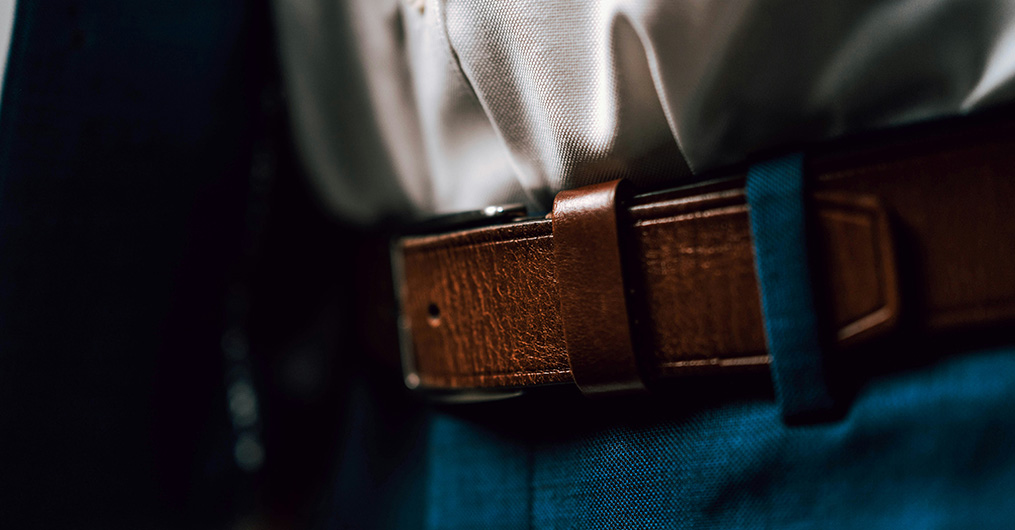
It may sound like a simple question, but it actually isn’t as straightforward as it seems. How can we ensure that the suit we wear is flattering and appropriate for the occasion, whether worn with or without a belt? Would a belt be helpful or distracting?
There is no universal answer for do or don’t, should or should not, always or never. Wearing a belt with a suit depends on various factors, such as purpose, formality, and how the trousers are designed to fit you. This article breaks down everything about the “relationship” between belts and suits, so that you can decide for yourself before stepping out in a well-put-together attire.
Why We Wear a Belt With a Suit
Wearing a belt with a suit serves both functional and stylistic purposes, depending on how the suit is constructed and how it’s worn.
- Keeping Trousers in the right position: Belts were traditionally worn for a simple reason – to hold up trousers, preventing them from falling. They’ve been a practical solution when trousers aren’t perfectly fitted. Notably, suit trousers usually include belt loops by default for us to wear them.
- Visual balance: A belt can help define the waist and create a balanced proportion between the upper and lower body. This is particularly useful in two-piece suits, where a tucked-in shirt benefits from a clean transition at the waistband.
- Professional and social expectations: In business and office environments, wearing a belt with a suit often feels natural and expected. Belts reinforce a polished, professional appearance and its absence can sometimes look unfinished.
- Style expression: A belt can also act as a subtle style accent. When chosen intentionally, it becomes an add-on character that echoes the tone of the shoes and enhances refinement.
How to Choose the Right Belt for a Suit
If you decide to wear a belt, choosing the right one is as important as understanding how it works. A suit belt should never be an afterthought because it completes your outfit cohesively.
Belt Width and Length
Width is one of the most important factors. Suit belts are ideally and typically around 3–3.5 cm wide (about 1.25 inches). Anything broader can look casual and overpower the tailored lines of the suit.
Belt Material
The material of a belt directly affects how formal or relaxed it appears. Smooth leather remains the standard choice for versatility, as it looks clean, refined and understated for different suit styles and settings.
In business casual or daily contexts, you have more flexibility, from lightly textured leather, suede belts to matte leather finishes, offering a more relaxed look compared to high-shine leather.
Avoid overly textured, distressed or fabric belts; these may undermine the tailored appearance even in relaxed settings.

Consultation
Need help building your Wardrobe ?
Schedule a complementary one-on-one virtual consultation with Shishir (Founder and Designer) and receive thoughtful guidance on fit, fabric, and style. Together, we'll create a wardrobe that feels effortless and uniquely yours.